Google Analytics Basics For Affiliate Marketers


Google Analytics is an amazing tool.
Even better that it's free.
But it's also incredibly robust and a little overwhelming.
However, the great news is that you don't have be a master of the tool in order to still get a lot of value out of it.
I'm certainly no expert myself, but in this article I want to introduce you to a few key metrics that I pay attention to as an affiliate marketer.

The Main Google Analytics Metrics I Pay Attention To
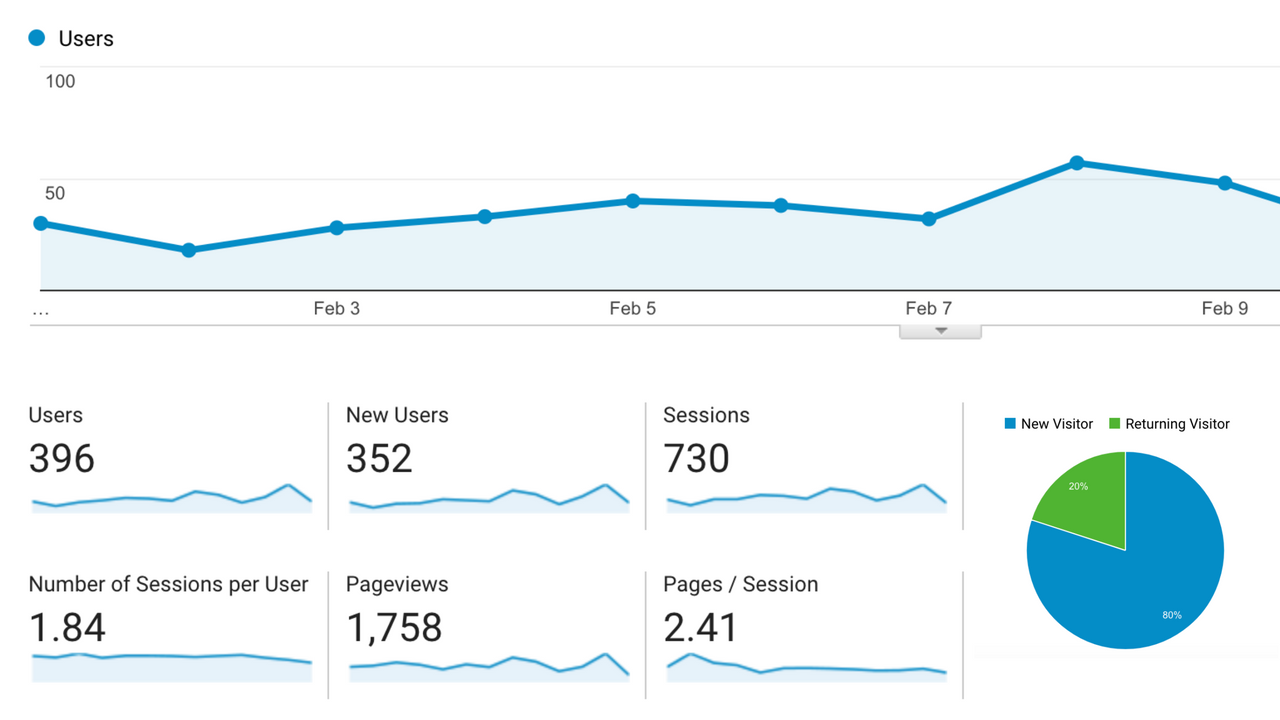
Pageviews: I like to know how many people are visiting my pages each month which helps me better calculate how much my average visitor is worth. To get this number simply take the amount of revenue your site is generating and divide that number by either the Pageviews or Users to your site.
Bounce Rate: I don't stress over bounce rate since I can't really do all that much if someone just decides to click the back button or click away from my site after they land on it. However, as a general rule I do try my best to keep my bounce rate around 50% or below. Some ways to do this are to make sure you create high-quality content that's also very engaging.
Average Session Duration: As a general benchmark I try and keep this number at least above 1 minute. Time on site is a factor that Google uses to determine the authority of a website, because if someone lands on your site from their search engine and they stay there for several minutes, it communicates to Google that your website is a great solution to whatever their search query was. Some ways to increase the average time on site is to include engaging media like relevant videos.
Demographics: I don't pay too much attention to these, however if you're also running paid ads, understanding what the average age range and gender of your audience is can certainly help save you some marketing dollars and better target your ideal customer right out of the gate.
Queries: Located under Acquisition > Search Console > Queries. This is extremely valuable data, because as you start to gain more traction and traffic to your website, Google will tell you the exact search phrases that people are typing in to find your website. When you know this information you can give those terms and content a little more attention to help optimize them and increase their ranks within the SERPs, which will bring in even more organic traffic to your site.

So, those are a couple of the main metrics that I pay attention to when using Google Analytics for my niche affiliate websites.
Obviously the more you master this tool the more dangerous you'll become as a marketer.
But, again, you don't have to be a Jedi Master with Analytics in the very beginning.
Just get started.
Pay attention to the data that you understand.
And you'll get better and better over time.

Comments

Popular posts from this blog

SEO Strategies For Affiliate Marketing

SEO (search engine optimization) is actually pretty simple. It mainly comes down to two things: on page SEO and off page SEO. On page SEO just means  optimizing your content  to rank for certain keywords. The main elements on the page you want to make sure and include your target keywords are your Title and URL. As far as the body itself don't worry so much about using the exact phrases you're going after word for word... It's more important that you concentrate on providing as much value as possible and writing for humans instead of trying to  keyword stuff  and trying to maintain a certain  keyword density . The other half of the SEO equation is off page SEO. This just means backlinks or  links from other high authority or relevant sites  pointing to the piece of content you're trying to rank. Off page SEO is also pretty simple - it mostly comes down to... The authority of sites linking to yours The relevance of the sites linki...

How To Flip Domain Names For Fun And Profit

Years ago I came across a blog article about a guy that was in his mid 20s, who regularly made multiple five figures per month online... Simply flipping domains. Now, we're not talking about the kind of domain flipping where you invest in expensive branded domains and then resell those to a higher bidder. All he was doing was picking up  brand new domain names  for just the cost of registration...and flipping those to local businesses, over and over. Now, I had heard of things like this during the dot com boom, in the early days of the Internet, so I thought the idea of flipping domains was a lost art and there was no more opportunity in that. But, this was about 2011 or so, so it was way past the dot com bubble. Now, I mention that story to reinforce that you still didn't miss the domain flipping gold rush. Flipping domains for easy profits is something anyone can still do, and it's even easier to do these days. Now, what the guy I mentioned above was d...

5 Simple Ideas For Creating Passive Income With Affiliate Marketing

There's so many different ways to make money online, but here are a list of just a couple that are all really simple and inexpensive to start, which each has the potential to generate you enough passive income to live a very comfortable lifestyle. Start A Blog I know it might sound hard, slow, and boring, but it doesn't have to be. Pick something you know a lot about and are passionate about already. The main tools you need to get started are a  custom domain name  and a  web hosting account , both of which are only going to set you back a few dollars. Then you can use a free tool like  KeywordTool.io  to get ideas and suggestions for topics to write about and over time you'll start to attract organic traffic from the search engines. Once you get traffic making money is easy. Sign up for  affiliate networks  and mention relevant products and services in your blog articles or add banners the sidebar of your site and eventually you'l...